Explore Bihar Tourism - Where Ancient History Meets Modern India
Bihar, located in the eastern part of India, stands as a testament to the incredible journey of human civilization, spirituality, and cultural evolution. This ancient land, which derives its name from the Sanskrit word "Vihara" meaning monastery, has been the cradle of some of the world's most significant religious and intellectual movements. From the teachings of Lord Buddha that originated in Bodh Gaya to the prestigious Nalanda University that attracted scholars from across the globe, Bihar's contribution to world heritage is immeasurable and continues to inspire millions of visitors every year.
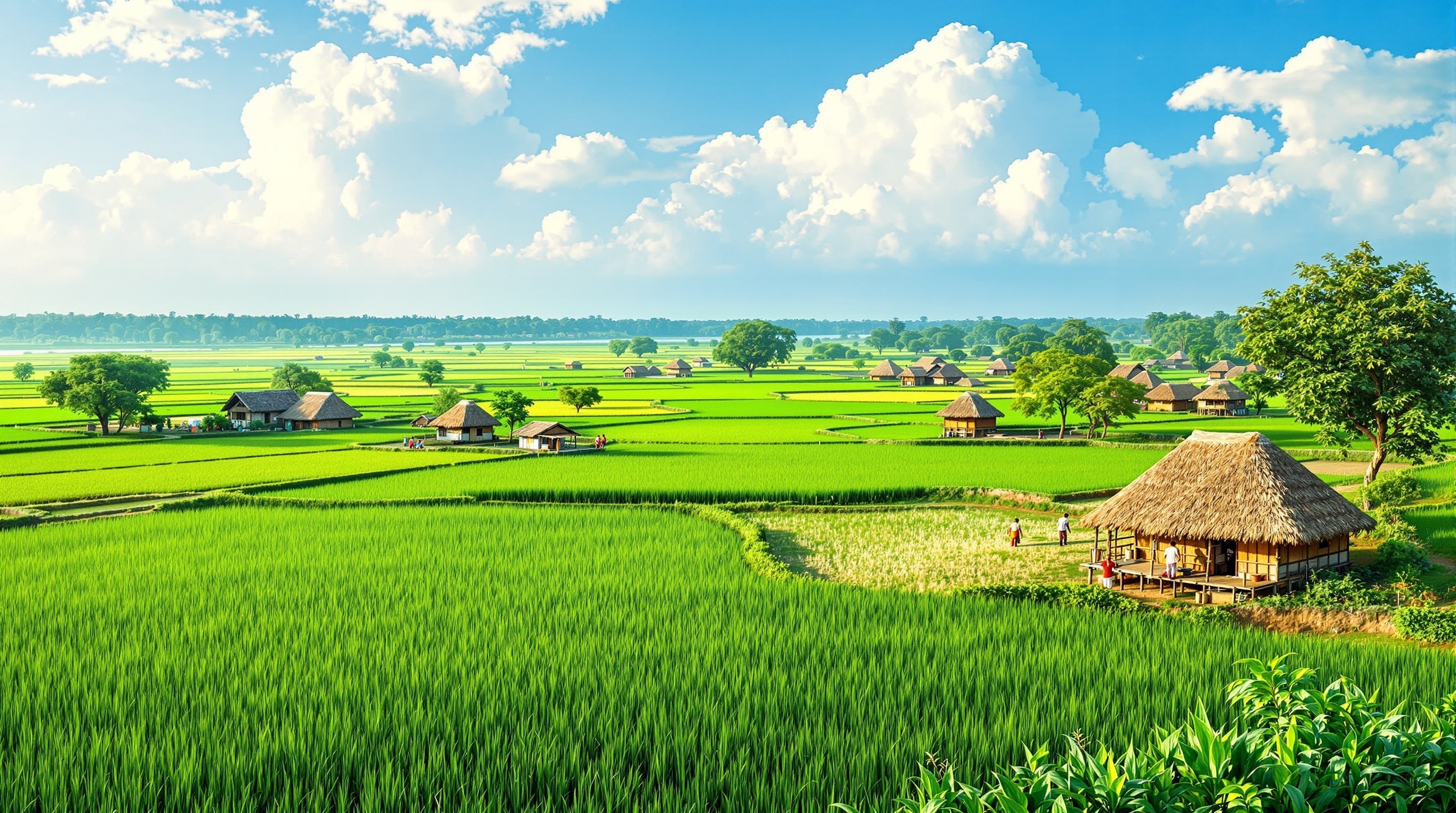
Spanning an area of approximately 94,163 square kilometers with a population exceeding 100 million, Bihar is India's third-most populous state and represents a fascinating blend of historical grandeur and contemporary vibrancy. The state shares its borders with Nepal to the north, which adds an international dimension to its geographical and cultural significance. The mighty rivers Ganges, Sone, Punpun, and Gandak flow through Bihar's fertile plains, creating a landscape that has sustained civilizations for thousands of years and continues to support one of the most agriculturally productive regions in India.
The state's capital, Patna, formerly known as Pataliputra, served as the seat of power for several major ancient Indian empires, including the Mauryan and Gupta dynasties. This historical city, situated on the southern bank of the river Ganges, has witnessed the rise and fall of kingdoms, the birth of religions, and the flowering of arts, sciences, and philosophy. Today, Patna serves as a modern urban center while retaining its historical charm, offering visitors a unique opportunity to experience both ancient monuments and contemporary Indian life.
The Historical Significance of Bihar in World Heritage
Bihar's historical importance cannot be overstated when discussing world civilization and cultural heritage. The state has been home to two of the world's major religions - Buddhism and Jainism. Lord Buddha attained enlightenment under the Bodhi tree in Bodh Gaya around 2,600 years ago, an event that changed the spiritual landscape of Asia and eventually influenced millions of people worldwide. This momentous occurrence established Bihar as the epicenter of Buddhist philosophy and practice, making it one of the most important pilgrimage destinations for Buddhists from Thailand, Myanmar, Japan, Sri Lanka, Tibet, and numerous other countries.
Similarly, Lord Mahavira, the 24th and last Tirthankara of Jainism, was born in Vaishali, Bihar, and spent a considerable part of his life preaching and propagating Jain principles across the region. Vaishali also holds the distinction of being the world's first republic, where a form of democratic governance existed as early as the 6th century BCE. This ancient city's contribution to political philosophy and governance models predates similar developments in other parts of the world by several centuries, establishing Bihar as a pioneer in democratic thought and practice.
The Mauryan Empire, which was one of the largest and most powerful empires in ancient history, had its capital in Pataliputra. Under the rule of Emperor Ashoka the Great, who embraced Buddhism after the bloody Kalinga War, the empire spread Buddhist teachings across Asia through diplomatic missions and the construction of numerous stupas and monasteries. The famous Ashoka pillars, with their exquisite craftsmanship and profound inscriptions promoting dharma and non-violence, can still be found in various locations across Bihar, serving as enduring symbols of India's ancient glory and ethical governance.
Spiritual Tourism: The Buddhist Circuit and Beyond
Bihar forms the core of the internationally renowned Buddhist Circuit, a sacred pilgrimage route that encompasses the most important sites associated with the life and teachings of Lord Buddha. This circuit attracts hundreds of thousands of Buddhist pilgrims and spiritual seekers annually, making Bihar one of India's most visited states for religious tourism. The Buddhist Circuit includes Bodh Gaya, where Buddha attained enlightenment; Rajgir, where he delivered many important sermons; Nalanda, where he taught; Vaishali, where he preached his last sermon; and Kesaria, which houses one of the tallest Buddhist stupas in the world.
Bodh Gaya, designated as a UNESCO World Heritage Site, stands at the heart of Bihar's spiritual tourism landscape. The Mahabodhi Temple Complex, with its towering spire and intricate architecture, marks the exact spot where Siddhartha Gautama became the Buddha. The temple complex includes the sacred Bodhi Tree, believed to be a direct descendant of the original tree under which Buddha meditated, and the diamond throne (Vajrasana) where he sat. The atmosphere in Bodh Gaya is uniquely international, with monasteries built by Buddhist communities from Japan, Thailand, Bhutan, Myanmar, Sri Lanka, and many other countries, each showcasing their distinct architectural styles and cultural interpretations of Buddhist teachings.
Beyond Buddhism, Bihar offers spiritual experiences for devotees of Hinduism, Jainism, Sikhism, and Islam. The state is dotted with ancient temples, including the Sun Temple at Deo, the Vishnupad Temple in Gaya, and numerous Shakti Peeths that hold significance in Hindu mythology. The Jain temples in Pawapuri, where Lord Mahavira attained Nirvana, attract Jain pilgrims from across India and abroad. The Takht Sri Patna Sahib, one of the five takhts or seats of authority in Sikhism, marks the birthplace of Guru Gobind Singh, the tenth Sikh Guru, making Bihar an important pilgrimage site for Sikhs as well.
Did You Know?
Bihar was home to the world's first residential international university at Nalanda, which operated continuously for 800 years (5th to 12th century CE) and attracted students from as far as Tibet, China, Greece, and Persia. At its peak, Nalanda housed over 10,000 students and 2,000 teachers, with a library so vast it burned for three months when destroyed by invaders.
Archaeological Treasures and UNESCO World Heritage Sites
Bihar boasts an exceptional concentration of archaeological sites that provide invaluable insights into ancient Indian civilization, architecture, and cultural practices. The ruins of Nalanda University, now a UNESCO World Heritage Site, represent one of the greatest achievements in ancient education and learning. The excavated remains reveal a sophisticated campus with residential quarters, meditation halls, libraries, and teaching spaces arranged in a well-planned layout. The red brick structures, though in ruins, still convey the grandeur and scale of this ancient seat of learning, where subjects ranging from Buddhist philosophy and logic to medicine, mathematics, and astronomy were taught with equal rigor.
The ancient city of Vikramashila, another major Buddhist university established in the 8th century CE, lies in the Bhagalpur district of Bihar. Though less famous than Nalanda, Vikramashila played an equally important role in the development and propagation of Vajrayana Buddhism. The excavated remains of the university complex include a main stupa, monasteries, temples, and a library, all constructed with remarkable architectural precision. The site continues to yield important archaeological discoveries that enhance our understanding of medieval Indian Buddhist practices and educational methodologies.
The Barabar Caves, located in the Jehanabad district, represent some of the oldest surviving rock-cut caves in India, dating back to the Mauryan period (322-185 BCE). These caves, carved into massive granite hills with extraordinary precision, showcase the advanced stone-cutting techniques of ancient Indian craftsmen. The interiors of the caves feature a mirror-like polish on the rock surfaces, a technological achievement that continues to puzzle modern engineers and archaeologists. These caves served as retreats for Ajivika ascetics and later Buddhist monks, and their inscriptions provide valuable historical information about Emperor Ashoka and his grandson Dasharatha.
Natural Beauty and Ecological Diversity
While Bihar is predominantly known for its cultural and historical significance, the state also offers considerable natural beauty and ecological diversity that often surprises first-time visitors. The Valmiki Tiger Reserve, located in the West Champaran district along the Indo-Nepal border, represents Bihar's commitment to wildlife conservation. This reserve, part of the larger Valmiki-Dudhwa-Katerniaghat tiger corridor, provides habitat for Bengal tigers, leopards, sloth bears, Indian bison, and numerous bird species. The dense sal forests, grasslands, and riverine ecosystems of Valmiki create a biodiversity hotspot that contrasts beautifully with Bihar's image as primarily a historical and cultural destination.
The Ganges River, considered sacred in Hinduism, flows through Bihar for approximately 445 kilometers, creating fertile plains that support agriculture and sustaining millions of people. The river's presence adds a spiritual dimension to the landscape, with numerous ghats (riverfront steps) where devotees perform religious rituals and ceremonies. The sunset views along the Ganges in Patna, Munger, and other cities offer moments of profound beauty and tranquility, connecting visitors to the timeless rhythms of Indian spiritual life.
The Rajgir hills, surrounding the ancient city of Rajgir, provide scenic beauty along with historical significance. These hills, which were once dotted with Buddhist monasteries, offer excellent opportunities for hiking and nature walks. The hot springs at Rajgir, known for their therapeutic properties, have been attracting visitors since ancient times. The Japanese-built Vishwa Shanti Stupa (World Peace Pagoda) atop Ratnagiri Hill offers panoramic views of the surrounding landscape and serves as a symbol of peace and international Buddhist cooperation.
Cultural Richness: Festivals, Arts, and Traditions
Bihar's cultural landscape reflects the diverse influences of various dynasties, religions, and communities that have flourished in the region over millennia. The state's artistic traditions, including Madhubani painting (Mithila art), have gained international recognition for their vibrant colors, intricate patterns, and unique stylistic elements. Originating in the Mithila region of Bihar, this ancient art form, traditionally practiced by women on the walls of their homes during festivals and special occasions, has evolved into a significant cottage industry that provides livelihoods to thousands of rural artists while preserving cultural heritage.
Bihar's festival calendar showcases the state's cultural vitality and religious diversity. Chhath Puja, the most important festival in Bihar, dedicated to worshipping the Sun God and his consort Usha, represents a beautiful blend of Vedic traditions and folk culture. Celebrated with immense devotion, particularly in October-November, Chhath Puja involves rigorous rituals including holy bathing, fasting, and standing in water bodies to offer prayers to the setting and rising sun. The festival transforms riverbanks and water bodies across Bihar into spectacular gathering places where hundreds of thousands of devotees come together in a display of faith, community solidarity, and cultural continuity.
The state's musical traditions include various folk forms like Sohar (songs sung during childbirth), Kajari (monsoon songs), and Chaiti (spring songs) that reflect the agricultural rhythms and seasonal cycles of rural Bihar life. These musical traditions, passed down through generations, preserve ancient wisdom, community values, and linguistic diversity. The traditional musical instruments used in Bihar, including the dholak, jhaal, and manjeera, create distinctive soundscapes that accompany various cultural performances and religious ceremonies throughout the year.
🏛️ Heritage Sites
Explore ancient universities, Buddhist monasteries, and architectural marvels that date back thousands of years.
🙏 Spiritual Journey
Visit sacred sites of Buddhism, Hinduism, Jainism, and Sikhism on a transformative pilgrimage.
🎨 Art & Culture
Experience vibrant festivals, traditional Madhubani art, and folk music traditions.
🍛 Authentic Cuisine
Savor delicious Bihari dishes including litti chokha, sattu paratha, and traditional sweets.
Economic Development and Modern Bihar
Contemporary Bihar is experiencing significant economic transformation and development, moving beyond its historical identity to embrace modernization while preserving its cultural heritage. The state government has implemented various initiatives to improve infrastructure, education, healthcare, and tourism facilities, making Bihar more accessible and visitor-friendly. The improvement in law and order, coupled with better connectivity through highways, railways, and airports, has contributed to increased tourist footfall and economic activity across the state.
The agricultural sector remains the backbone of Bihar's economy, with the state being one of India's leading producers of vegetables, fruits, and grains. The fertile Indo-Gangetic plains provide ideal conditions for multiple cropping seasons, supporting a predominantly rural population. Recent initiatives in food processing, organic farming, and agricultural technology are helping modernize this traditional sector while creating new employment opportunities for youth and women.
Bihar's education sector has seen remarkable improvements, with increasing enrollment rates at all levels and the establishment of new institutions of higher learning. The revival of Nalanda University as a modern international institution symbolizes Bihar's commitment to reclaiming its historical role as a center of learning and knowledge. The state is also making strides in information technology, healthcare services, and renewable energy, indicating a diversification of its economic base and a forward-looking development approach.
Tourism Infrastructure and Visitor Facilities
Recognizing tourism's potential for economic growth and cultural exchange, Bihar has invested significantly in developing tourism infrastructure and visitor facilities. The state tourism department operates hotels and tourist bungalows at major destinations, providing comfortable accommodation options at reasonable prices. Private hotels, guesthouses, and homestay facilities have also mushroomed across popular tourist locations, catering to various budget ranges and preferences. Many international hotel chains have established presence in Patna and Bodh Gaya, bringing world-class hospitality services to Bihar.
Transportation connectivity has improved dramatically, with Patna's Jay Prakash Narayan International Airport offering regular flights to major Indian cities and international destinations. Gaya Airport serves as a convenient entry point for Buddhist circuit tourists, with direct flights from Bangkok, Colombo, and Paro (Bhutan). The railway network, being one of the oldest and most extensive in India, connects all major cities and towns in Bihar, making train travel an economical and convenient option for exploring the state.
The Bihar State Tourism Development Corporation (BSTDC) operates guided tours, provides tourist information, and maintains various monuments and sites across the state. Tourist information centers at major destinations offer maps, brochures, and assistance in multiple languages, helping international and domestic visitors navigate their Bihar experience more easily. The introduction of online booking systems, mobile applications, and multilingual websites has further enhanced the accessibility and convenience of planning a Bihar visit.
Sustainable and Responsible Tourism
As Bihar's tourism sector grows, there is increasing awareness about the importance of sustainable and responsible tourism practices. Many heritage sites face challenges from high visitor numbers, environmental degradation, and inadequate conservation resources. The Archaeological Survey of India (ASI), along with state authorities and international organizations like UNESCO, works on preserving and maintaining Bihar's precious cultural heritage through scientific conservation techniques, documentation, and public awareness programs.
Local communities play a crucial role in tourism development, and efforts are being made to ensure they benefit economically from visitor spending. Initiatives promoting homestays, local handicrafts, and cultural performances provide income opportunities while giving tourists authentic cultural experiences. The emphasis on training local guides, artisans, and hospitality workers ensures that tourism development is inclusive and contributes to poverty alleviation in rural areas.
Environmental conservation has become an integral part of Bihar's tourism strategy, particularly in ecologically sensitive areas like the Valmiki Tiger Reserve and along the Ganges river. Programs promoting plastic-free tourism zones, waste management, and ecological restoration are being implemented at major tourist sites. Visitor education about cultural sensitivity, responsible photography, and environmental protection helps minimize tourism's negative impacts while enhancing the overall experience.
Planning Your Visit to Bihar
The best time to visit Bihar depends on your specific interests and tolerance for different weather conditions. The winter months from October to March offer the most pleasant weather, with comfortable temperatures ranging from 10°C to 25°C, making it ideal for sightseeing and outdoor activities. This period coincides with major festivals like Chhath Puja and experiences the highest tourist influx, so advance booking of accommodation is advisable. The summer months (April to June) can be quite hot, with temperatures soaring above 40°C, though this period sees fewer crowds and hotels often offer attractive discounts.
A typical comprehensive tour of Bihar's major attractions requires at least 7-10 days, though shorter focused trips targeting specific interest areas (Buddhist circuit, heritage sites, or cultural experiences) are certainly feasible. Most international tourists follow a circuit that includes Bodh Gaya, Nalanda, Rajgir, and Vaishali, often combined with visits to nearby Patna. Domestic tourists might add destinations like Valmiki Tiger Reserve, Munger, or religious sites like Gaya and Pawapuri depending on their interests.
Visa requirements for international tourists follow standard Indian visa procedures, with most nationalities eligible for e-visas. The Indian government has introduced a special Buddhist circuit tourist visa that facilitates longer stays for pilgrims visiting multiple Buddhist sites across India. Travel insurance covering health emergencies and trip disruptions is highly recommended, as medical facilities in rural areas may be limited compared to major cities.
Culinary Delights of Bihar
No exploration of Bihar is complete without experiencing its distinctive culinary traditions that reflect the state's agricultural abundance and cultural diversity. Bihari cuisine emphasizes simple preparation methods that bring out natural flavors, with extensive use of locally grown ingredients like sattu (roasted gram flour), seasonal vegetables, mustard oil, and aromatic spices. The food culture varies across different regions of Bihar, with Bhojpuri, Maithili, and Magahi cuisines each offering unique dishes and flavors.
Litti chokha, Bihar's most iconic dish, consists of wheat flour balls stuffed with roasted gram flour (sattu) and spices, traditionally cooked over coal or wood fire, and served with mashed vegetables (chokha) made from roasted eggplant, tomatoes, and potatoes. This rustic yet flavorful dish has gained popularity across India and is increasingly featured in urban restaurants beyond Bihar. The smoky flavor and hearty texture of litti chokha represent the essence of Bihari hospitality and rural food traditions.
Bihar's sweet traditions include numerous regional specialties like khaja (layered sweet), anarsa (rice-based sweet), thekua (deep-fried sweet), and pedakiya (milk-based sweet) that are prepared during festivals and special occasions. These sweets, often made using traditional recipes passed down through generations, showcase the state's expertise in working with ingredients like jaggery, milk, and rice flour. Many of these traditional sweets are now commercially produced and available in cities across India, taking Bihar's culinary heritage to a broader audience.
Conclusion: Bihar Awaits Your Discovery
Bihar represents a unique destination where ancient history lives alongside modern development, where spirituality infuses daily life, and where cultural traditions continue to thrive amidst changing times. Whether you are a history enthusiast, spiritual seeker, culture lover, or adventure traveler, Bihar offers experiences that are both deeply enriching and distinctly memorable. The state's transformation in recent years, with improved infrastructure and visitor facilities, has made it more accessible than ever while retaining its authentic character and traditional charm.
The journey through Bihar is not just a physical exploration of places and monuments; it is a journey through time that connects you to the roots of human civilization, philosophical thought, and spiritual wisdom. Walking through the ruins of Nalanda, you feel the presence of ancient scholars; meditating in Bodh Gaya, you sense the profound peace that Buddha discovered; witnessing Chhath Puja celebrations, you experience the living continuity of ancient traditions; savoring authentic Bihari cuisine, you taste the cultural heritage preserved in every recipe.
As Bihar continues to develop its tourism potential while preserving its invaluable heritage, it invites you to be part of this remarkable story. Come, explore Bihar's treasures, connect with its people, experience its spiritual energy, and create memories that will enrich your life and broaden your understanding of India's incredible cultural diversity and historical depth. Bihar is not just a destination; it is an experience that transforms, educates, and inspires all who visit with an open heart and curious mind.